
Blog
Meze Audio Strada Review — Headfonics
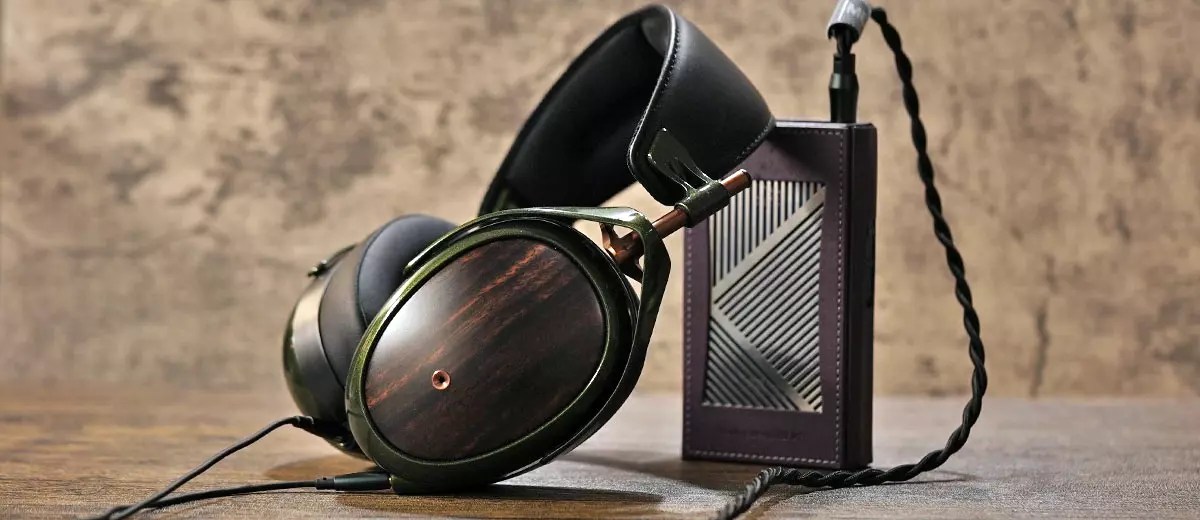
James reviews the Meze Audio Strada, a new set of closed-back dynamic-driver headphones featuring a Macassar ebony ear cup design. They are currently priced at $799.
Disclaimer: This sample was sent to me in exchange for my honest opinion. Headfonics is an independent website with no affiliate links or status. I thank Meze Audio for their support.
You can click here to learn more about Meze Audio products previously reviewed on Headfonics.
This article follows our current scoring guidelines, which you can read in more detail here.
Meze Audio Strada Review
Summary
The Meze Audio Strada beautifully adapts the refined chassis of the flagship Liric II into a more affordable price point. Equipped with a carefully retuned 50mm dynamic driver derived from the 109 PRO, the Strada delivers a lively, textured, and agile output for a closed design that doesn't feel veiled, sluggish, or curtained.
Pros
Easy to drive.
High quality build.
Decent clarity.
Cons
Sounds slightly brittle when underpowered.
Cable a bit long for outdoor use.
The Strada is Meze’s latest portable closed-back headphone, whose name, when translated directly from Romanian, means “street”.
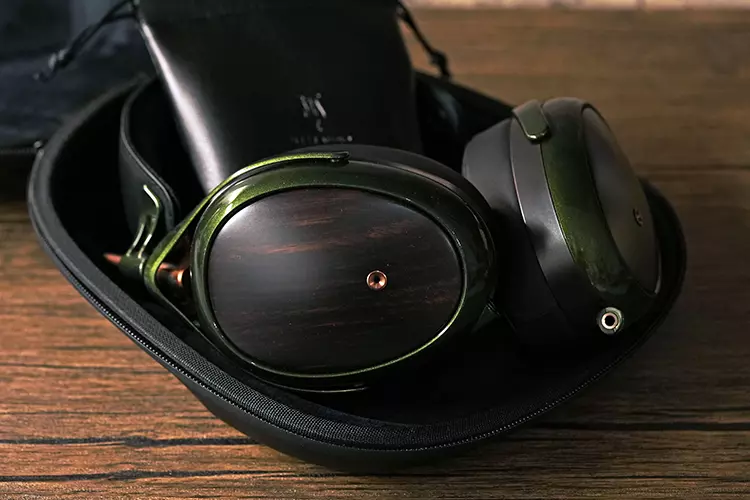
The Strada borrows unmistakable visual and structural DNA from the flagship Liric II and uses a lightweight magnesium-alloy frame. The whole package reminds me of a Lamborghini Aventador ULTIMAE finished in dark green, which is aggressive yet elegant.
Priced at $799 USD, the Strada is clearly one of the coolest-looking portable headphones on the market, but how does it perform and compare to Meze Audio’s mid-range open-back 105 SILVA and closed-back headphones, such as Final’s recent DX3000 CL?
I find out whether the sound matches the confident, street-ready aesthetic in my full review below.
Features
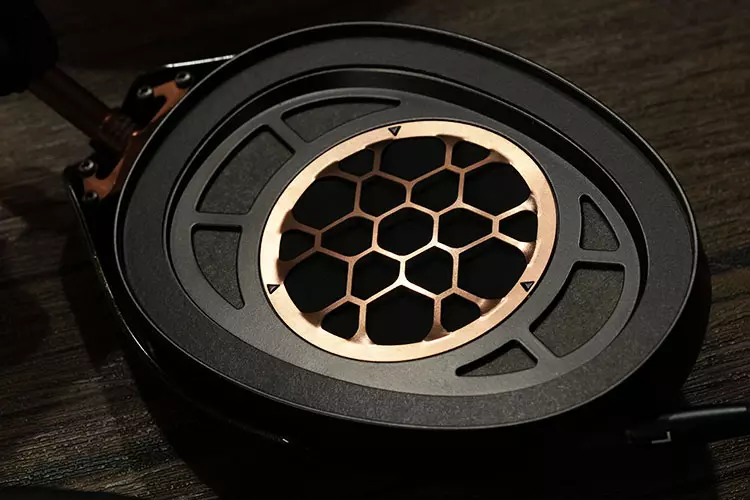
Under the hood, the Strada features a 50 mm large dynamic driver. You might have heard that it is derived from the 109 PRO and retuned for closed-back application.
The diaphragm has a dual-composite construction, using carbon fiber-reinforced cellulose as the base and a beryllium polymer coating that adds stiffness to improve transient response and transparency.
There is also a copper-zinc stabilizer ring inside to enhance precision further, tightening everything up for stronger distortion control.
In terms of measurements, the Strada achieves <0.1% THD at 1 kHz. Measuring 40Ω for impedance and 111 dB SPL/mW at 1kHz, the Strada gets loud easily with any source, and there is room for it to scale with higher output swings.
Design
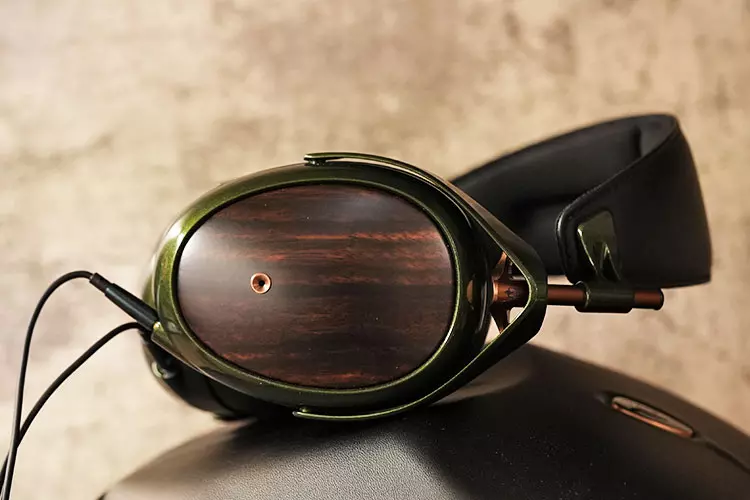
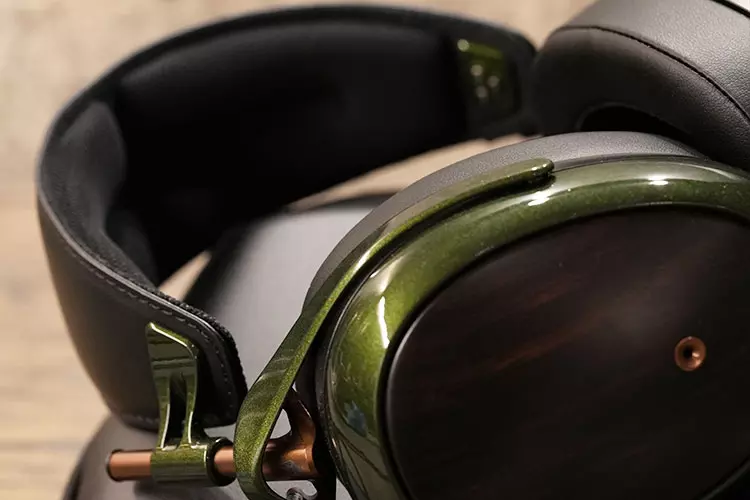
Unlike most brands that stick safely to black or silver, Meze boldly chooses a very cool, deep green finish for the Strada, beautifully blended with hand-crafted dark Macassar ebony wood ear cups.
The result is an unusually sophisticated yet streamlined appearance that stands out immediately, and the blend of materials looks cohesive.
Since each piece of Macassar ebony is naturally unique, every pair of Strada showcases its own distinct grain and figuring. You’ll also notice a subtle air vent on the housing, which is adorned with dedicated metallic venting parts.
Despite using a metallic band with wood inserts, the overall weight stays impressively low at below 350g, yet it feels solid and sturdy in hand and on the head.
The sliding mechanism is friction-based, making it smoother and easier to adjust. Every element feels thoughtfully designed, just like the sleek, streamlined lines of hypercars. It strikes a great balance between futuristic elegance and the natural charm of real wood panels.
Additionally, when you flip it over, you can see the meticulously designed metallic grills between the drivers. That’s some good attention to detail, and the whole package feels very premium and thoughtfully designed.
Comfort & Isolation
The Meze Strada borrows the chassis, headband design, and premium padding architecture from the Liric II, though it is much lighter, making it much easier to carry.
With its large, well-distributed headband, the weight is evenly distributed, and isolation is as good as expected. It blocks out most noise without sounding overly dampened, allowing faint ambience to leak through.
The clamping force is just right, providing a great seal without any discomfort even after hours of listening.
The magnetic-locked earpads are easy to replace and feel premium and breathable. The seal remains excellent even with sunglasses on, and the cups have sufficient depth, which helps deliver deeper bass, accommodate larger ears, and provide a secure fit.
Stock Cable
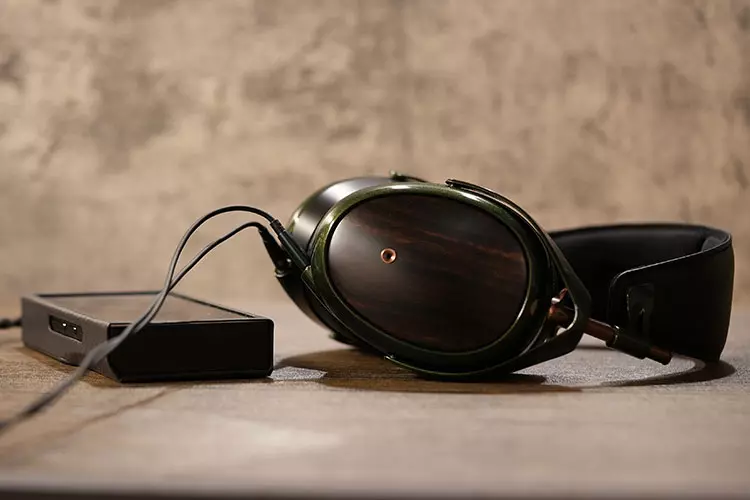
The Meze Strada includes two OFC stock cables in the box: a 3.5mm one and a 4.4mm-terminated one, with Kevlar reinforcement wraps for durability, flexibility, and low microphonics.
It is recommended to use the 4.4mm connection for higher output power from most sources, and including a 3.5mm-terminated cable provides flexibility to use compatible single-ended amplifiers, mixers, or laptops.
The cables are 1.8m long, which is great for desktop use or when you put your Bluetooth receivers in your backpack, but may feel a bit long when you have it connected to a DAP in your pocket.
This is one area where it falls short of the Liric II, which is probably why they can drop the price so drastically. These cables are still very solidly built and deliver great dynamics and clarity. There is also little memory effect and no microphonics.
Packaging & Accessories
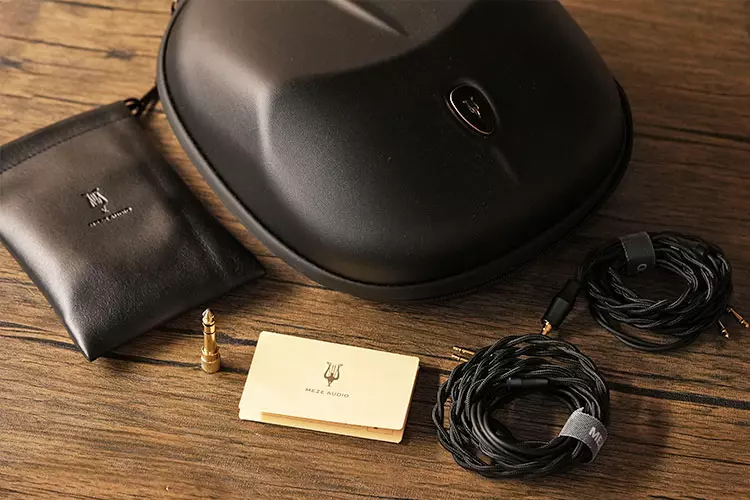
The Strada arrives in a simple cardboard box with a sticker label. Upon opening the packaging, you’ll find a small introduction card and the protective hard case inside.
Interestingly, no foam inserts are used. Meze appears very confident in the headphone’s build quality and the case’s protective capabilities.
The hard case is precisely shaped to fit the Strada snugly, holding it securely in place. Inside the case, you’ll also find a leather pouch containing the two cables.
I appreciate this straightforward presentation and the thoughtful small extras. At this price point, practicality takes priority over fanciness.
Sound Impressions
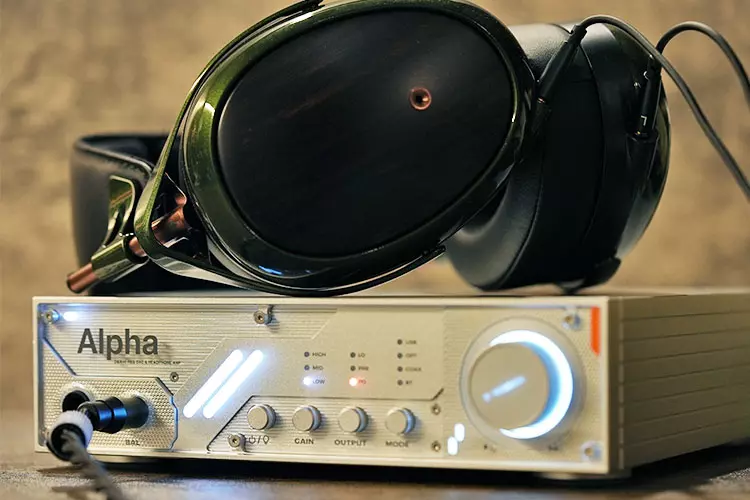
After more than a week of burn-in, the impressions below are based on pairing the Strada with various desktop amplifiers, including the D&A Alpha PRO, FiiO’s K17, K19, and the Luxsin X9.
I also compared the Strada to the 105 SILVA later, which I think shares some tonal similarities.
Summary
Riding on a proven framework and drivers derived from the 109 Pro, but now in a closed configuration, the Strada delivers an open yet immersive presentation for a sealed design.
There is a good hint of warmth in the mid-lows and a little emphasis on the upper treble. You can clearly feel Meze’s intention in creating a holographic stage that projects more from the head than traditional closed designs.
The design borrows composure from Meze’s higher-end models and remains emotionally engaging while being cleaner. I would call it a W-shaped tuning with a slight tilt toward the right-hand side of the spectrum, with good brilliance and control that doesn’t sound clinical.
The Strada is easy to drive, responsive to power for tighter, firmer transients, and sounds resolving even when listening in a coffee shop or on the train.
Timbre
The hardwood faceplate on the metallic frame adds subtle resonance, bringing the tonality to life and making it feel more organic, despite its excellent distortion measurements.
In practice, the bass is impactful with moderate tightness and agility, while the treble shows good brilliance across sources, but remains nicely controlled without sacrificing dynamics.
On trending Pop tracks, dynamics and coherence are satisfactory, with gentle warmth in the vocal body enhancing holography, and a slight upper-mid elevation that helps the mids cut through outdoors.
Even from weaker sources like a MacBook Air or a FiiO BTR15, vocals sound energetic and have good presence. The bass softens slightly but remains punchy and dynamic. Sharper voices and operas can sound a touch brittle yet maintain adequate harmonic richness.
I like how the vocal delivery stays clean and natural, with sufficient bite and fullness, given the closed-back design. The presence of higher vocal frequencies is also beneficial for FPS gaming, as it enhances the presence of footsteps.
On vocal tracks and acoustic guitars via K17 and Luxsin X9, the Strada delivers solid impact at medium to high gain. There are clean decay, good impact, and upper-vocal emphasis.
Despite being closed back, it offers surprising openness and transparency. Fast strings and guitar licks sound wet and swift with adequate lower-register weight.
The tuning suits lovers of ethereal voices and synthesized instruments who prefer the bass not to dominate. Tuning with minimal coloring also emphasizes spatial positioning and focuses on midrange quality over open-back counterparts.
Staging & Dynamics
With its responsive driver and slight emphasis on upper vocal frequencies, the Strada helps position vocal images more clearly, strengthening picking details and the edge of string instruments, while flutes and woodwinds remain free from sounding too hot. Overall resolution and expansiveness are decent.
The Strada reaches quite deep in the subs, with faint rumbles audible, so bass instruments don’t feel omitted.
Percussion stands out distinctly in the mix, though in large ensembles, you may notice some constraints on presence and separation, and there is slight dynamic compression when the bass line thickens or becomes complex, which is a common caveat with closed-back design.
Transients feel tight overall, and the stage rendered remains quite spacious, even when driven by less powerful sources.
You may want to tame the treble slightly with EQ for K-pop or sharper voices, but in most cases, the treble brilliance lends an uplifting, responsive, and naturally articulated character, promoting clarity especially when listening outdoors.
Click on page 2 below for my recommended pairings and selected comparisons.
Related Posts

Hifiman Arya Wifi Review – Headfonia

LUXEAR Valor Review – Headfonia

JBL Soundgear Clips Review: Everyday Sound, Now in Style!

What’s New in the 64 Audio TWELVE Ti Special Edition?

AFUL Performer 8S Review — Headfonics

Meze Astru Review – Headfonia

Aful Performer 8S Review – Headfonia

Best Gear & Recommended Buys

FiiO EH11 Review — Headfonics

Strauss & Wagner Review: Silphase Silicone Eartips

Cayin T201 Review — Headfonics
